 Flights

Hotline:+603-9232-1999
 Hotels
 Flight + Hotels
 Car Rentals
 Students
 Attraction Ticket
 SCB
 Blog

Thailand Unpacked: Travel Guide
12 Nov 2026
Thailand Unpacked: Travel Guide

Planning a trip to Thailand? Discover stunning beaches, island-hopping adventures, local travel tips,
and must-visit destinations in our complete Thailand travel guide.
Golden temples at sunrise. Sizzling woks on every corner. Longtail boats bobbing in water so clear it looks photoshopped. If Thailand has been living rent-free on your travel wishlist, this is your sign to finally book it.
This Thailand travel guide covers everything you need to plan a trip that actually lives up to the hype: the best time to visit Thailand, entry rules, where to go, how to get around, what it costs, and the etiquette that will win you smiles everywhere you go. First trip or fifth, consider this your shortcut to a smoother, smarter Thailand holiday.
Few places pack this many varieties into one country:
-
Island life: powder-white beaches, turquoise bays and some of Asia’s best snorkelling and diving.
-
Mountains and jungle: misty hill country in the north, waterfalls and national parks in between.
-
Culture everywhere: more than 40,000 Buddhist temples, royal palaces and centuries-old ruins.
-
A food scene that rivals any city on earth: from 50-baht street noodles to Michelin-starred tasting menus.
-
Genuine warmth: Thai hospitality is the real deal, not a marketing line.
Best Time to Visit Thailand
The best time to visit Thailand is generally from November to February, when the weather is cooler, drier, and ideal for sightseeing, island hopping, and outdoor adventures. However, the perfect travel season depends on your destination, travel style, and budget. For the latest Thailand travel deals, promotions, and holiday packages, visit the Mayflower Holidays website.
|
Season |
Months |
What to expect |
Best for |
|
Cool season |
Nov–Feb |
Sunny, dry, lower humidity; peak crowds and prices |
Beaches, Bangkok, northern trekking |
|
Hot season |
Mar–May |
Scorching days, often 35°C+; Songkran water festival in April |
Island hopping, festival lovers |
|
Rainy season |
Jun–Oct |
Short, heavy afternoon showers; lush scenery |
Budget travellers, fewer crowds |
Pro tip: the two coasts run in different weather. The Andaman side (Phuket, Krabi, Koh Lanta) is wettest from May to October. The Gulf islands (Koh Samui, Koh Phangan, Koh Tao) get their heaviest rain from October to December. Pick your coast to match your dates, and you can find sunshine almost any month of the year.
How to Get Around Thailand
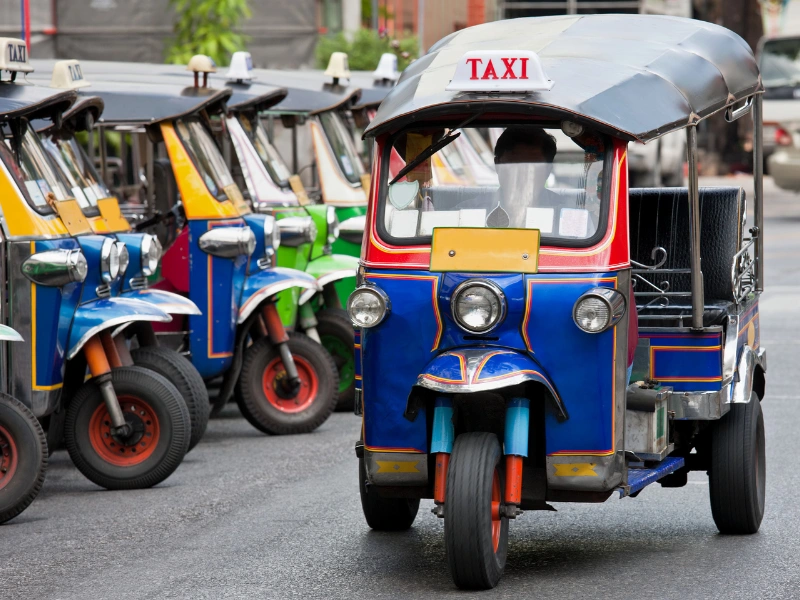
Colourful tuk-tuks
Thailand’s transport network is cheap, easy and surprisingly efficient. Here’s how to make every travel day count:
|
Option |
Best for |
Good to know |
|
Domestic flights |
Long hops, e.g. Bangkok to Phuket or Chiang Mai |
Budget airlines like AirAsia and Thai VietJet often cost less than a nice dinner back home |
|
Trains |
Scenic, budget-friendly overland trips |
The overnight sleeper from Bangkok to Chiang Mai is a bucket-list ride |
|
Buses and minivans |
Shorter regional routes |
Book through your hotel or 12Go for door-to-door transfers |
|
Ferries and speedboats |
Island hopping |
Combined bus + boat tickets make island transfers simple |
|
Tuk-tuks and songthaews |
Short city hops |
Agree the fare before you hop in |
|
Grab and Bolt |
Hassle-free city rides |
Fixed upfront prices, no haggling |
Train tip: most long-distance trains now depart from Krung Thep Aphiwat Central Terminal (formerly Bang Sue). Historic Hua Lamphong Station, with its grand arched windows and clock tower, is still worth a visit for photos.
Thai Culture and Etiquette: Do’s and Don’ts
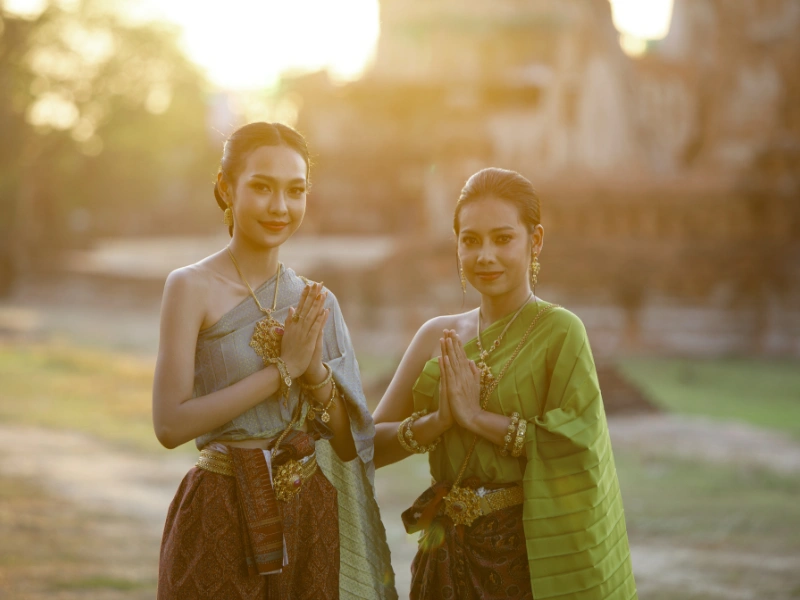
Thailand offers a rich cultural journey through ancient temples, local traditions, and authentic experiences.
Thai culture runs on respect and politeness. A few small gestures go a long way:
-
Dress modestly at temples: shoulders and knees covered.
-
Shoes off before entering homes, temples, and some shops.
-
Never touch someone’s head, including children. It is considered the most sacred part of the body.
-
Mind your feet: don’t point them at people or Buddha images and avoid stepping over people.
-
Respect the monarchy: Thailand has strict laws against criticising the royal family.
-
Learn the wai: a slight bow with palms pressed together is the classic Thai greeting.
Money tip: ATMs are everywhere but arrive with some Thai baht for your first taxi and snacks. Local ATMs charge a fee of around 220 baht per withdrawal, so take out larger amounts less often.
What to Pack for Thailand
The golden rule: pack light, pack breathable. Your Thailand packing list essentials:
-
Lightweight clothes in cotton or linen
-
Swimwear and a quick-dry towel
-
Comfortable walking shoes plus sandals you can slip off at temples
-
Reef-safe sunscreen and mosquito repellent
-
Universal power adapter (Thailand uses Type A, B and C plugs)
-
Travel insurance documents (digital and printed)
-
A scarf or sarong to cover shoulders and knees at temples
Money tip: ATMs are everywhere but arrive with some Thai baht for your first taxi and snacks. Local ATMs charge a fee of around 220 baht per withdrawal, so take out larger amounts less often.
Thailand Travel FAQs
- How many days do you need in Thailand? Ten to fourteen days is ideal for a first trip: three days in Bangkok, three to four in Chiang Mai, and the rest on the islands.
- Do I need a visa for Thailand? Travellers from the UK, US, Australia, Canada and most of Europe can stay up to 30 days visa-free. You will still need to complete the online Thailand Digital Arrival Card before you land.
- What is the cheapest time to visit Thailand? The rainy season, from June to October, brings lower hotel prices and thinner crowds. Showers are usually short and come in the afternoon.
- Is Thailand safe for solo travellers? Yes. Thailand is one of Southeast Asia’s most popular solo-travel destinations. Use normal precautions with valuables, scooters, and late nights.
- Can I drink the tap water in Thailand? It is best not to. Bottled and filtered water is cheap and easy to find everywhere.
Ready to Pack Your Bags?
From Bangkok’s electric streets to Chiang Mai’s mountain calm and Phuket’s postcard beaches, Thailand delivers a holiday that hits every note. Use this Thailand travel guide as your roadmap, mix culture with coastline, and leave room for the unplanned moments that end up being the best ones.
Let Mayflower Holidays take care of the planning while you charge your camera, pack your sarong, and get ready for a journey filled with smiles, sunshine, delicious food, and unforgettable memories. Thailand is waiting for you.