 Flights

Hotline:+603-9232-1999
 Hotels
 Flight + Hotels
 Car Rentals
 Students
 Attraction Ticket
 SCB
SCB
 Blog
Blog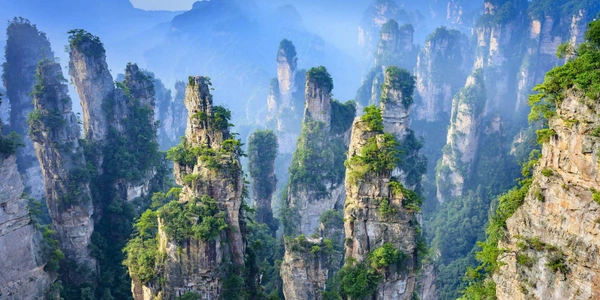
10 Best Eco Tourism Destinations in China
01 Oct 2026
10 Best Eco Tourism Destinations in China
Quick answer: The best eco-tourism destinations in China are Mount Huangshan (Anhui), Dunhuang's Echoing Sand Mountain (Gansu), Karakul Lake (Xinjiang), Changbai Mountain (Jilin), Yangshuo (Guangxi), Zhangjiajie (Hunan), Jiuzhaigou (Sichuan), the Hulunbuir Grasslands (Inner Mongolia), Mount Kawa Karpo (Yunnan), and Huangguoshu Waterfall (Guizhou). Each site combines protected landscapes with active conservation programs from visitor caps to UNESCO and EarthCheck certifications making them China's top picks for sustainable, low-impact travel.
China's scale and geography give it an outsized range of ecosystems misty granite peaks in Anhui, singing sand dunes in the Gobi, alpine grasslands in Inner Mongolia and a growing number of regions are proving that conservation and tourism can grow together. China's eco-tourism market is projected to keep expanding as travelers increasingly seek destinations with real sustainability credentials, not just scenic backdrops. Below are the 10 eco destinations doing that best, along with what makes each one sustainable, when to go, and what to expect.
At a Glance: China's Top 10 Eco Tourism Destinations
|
# |
Destination |
Province |
Known For |
Sustainability Highlight |
|
1 |
Mount Huangshan |
Anhui |
Granite peaks, sea of clouds |
First Chinese National Park with EarthCheck Silver Certification |
|
2 |
Echoing Sand Mountain & Crescent Lake |
Gansu |
Singing sand dunes, desert oasis |
Historic Silk Road site with managed visitor access |
|
3 |
Karakul Lake |
Xinjiang |
High-altitude alpine lake |
Remote, low-traffic Pamir Plateau ecosystem |
|
4 |
Changbai Mountain |
Jilin |
Volcanic reserve, Siberian tigers |
China's largest protected nature reserve |
|
5 |
Yangshuo |
Guangxi |
Karst peaks, Li River |
Low-impact travel by bamboo raft and bicycle |
|
6 |
Zhangjiajie |
Hunan |
Sandstone pillars ("Avatar" mountains) |
UNESCO World Heritage Forest Park |
|
7 |
Jiuzhaigou |
Sichuan |
Color-changing lakes, waterfalls |
Daily visitor cap of 2,000 post-2017 earthquake reconstruction |
|
8 |
Hulunbuir Grasslands |
Inner Mongolia |
Vast steppe, nomadic herding culture |
Low-density tourism across 90,000+ km² |
|
9 |
Mount Kawa Karpo |
Yunnan |
Sacred Tibetan peak |
Protected pilgrimage route (kora) |
|
10 |
Huangguoshu Waterfall |
Guizhou |
Asia's largest waterfall |
Multi-angle viewing designed to limit trail erosion |
1. Mount Huangshan, Anhui: Best for Classic Chinese Landscape Photography
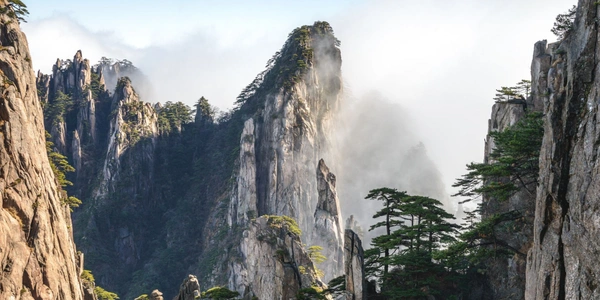
Mount Huangshan (Yellow Mountain) is famous for its granite peaks wreathed in mist, wind-sculpted pines, and clouds that seem lifted straight out of a classical Chinese ink-wash painting. It's been a pilgrimage site for artists and poets for centuries.
Why it's sustainable: Since 1989, Huangshan has used a scenic-area closure rotation system to protect rare species and let soil and forest recover. In 2000, it was named a UNWTO Sustainable Tourism Observatory one of only 21 such sites worldwide and in 2017 it became the first Chinese National Park to earn EarthCheck Silver Certification.
Good to know: Trails rotate seasonally, so check which sections are open before you go, and expect crowds during Chinese public holidays.
2. Echoing Sand Mountain & Crescent Lake, Dunhuang, Gansu: Best for Silk Road History
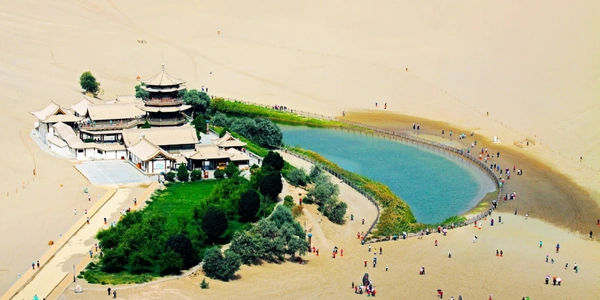
Dunhuang sits where the Silk Road's northern and southern routes around the Taklamakan Desert converge, near the western edge of the Gobi Desert. Just outside the city, the Echoing Sand Mountain dunes surround Crescent Lake, a perennial oasis lake.
Why it's sustainable: The dunes get their name from the "singing sand" phenomenon wind moving across the sand creates a roar in strong wind and a whisper in a light breeze a natural feature preserved through managed access rather than heavy infrastructure.
Good to know: Visit at sunrise or sunset for the best light and cooler temperatures; camel treks and sandboarding are the main low-impact activities.
3. Karakul Lake, Xinjiang: Best for Remote High-Altitude Scenery
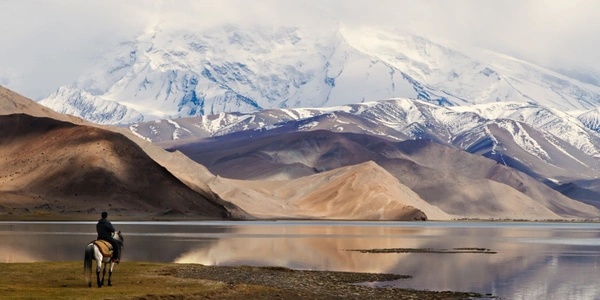
At 3,600 meters, Karakul Lake (Black Lake) is the highest lake on the Pamir Plateau, despite its name showing off water in shades of dark green to azure. It sits below a convergence of the Himalayan, Pamir, Tien Shan, and Kunlun mountain ranges.
Why it's sustainable: Its remoteness near Kashgar, once a crossroads of the British, Russian, and Chinese empires naturally limits visitor volume and keeps the ecosystem largely undisturbed.
Good to know: Reach it by flight or train via Urumqi, or by road on the Karakoram Highway, one of the world's most dramatic drives.
4. Changbai Mountain, Jilin: Best for Wildlife and Old-Growth Forest
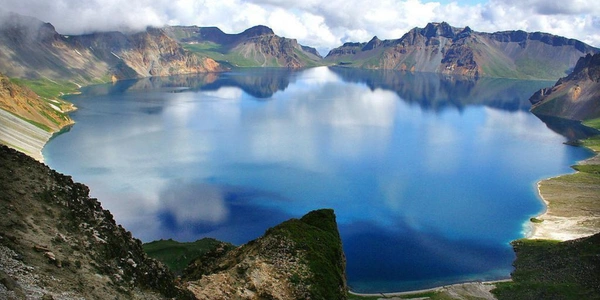
Changbai Mountain National Reserve, along the North Korean border, is China's largest protected area and covers more than 500,000 acres of pine forest. It's the country's last remaining habitat for wild Siberian tigers.
Why it's sustainable: During the Qing Dynasty it was the "Forbidden Holy Mountain," off-limits to the public for 300 years a restriction that inadvertently preserved its ecosystem and now underpins its status as a protected reserve.
Good to know: It's also emerging as a ski destination in winter, so visit in summer or early autumn for wildlife-focused eco travel.
5. Yangshuo, Guangxi: Best for Low-Impact Countryside Travel
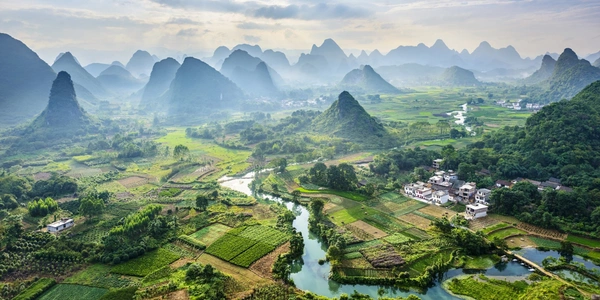
"Guilin's landscape tops the rest, and Yangshuo's tops Guilin's" is a common Chinese saying, and it's not an exaggeration. Yangshuo is a riverside town surrounded by karst peaks, with water buffalo working green fields and fishermen drifting down the Li River.
Why it's sustainable: Bamboo rafts and bicycles are the default way to explore, keeping the region's carbon footprint low compared to motorized tourism.
Good to know: Rent a bike and ride the countryside roads outside town for the quietest, least crowded views.
6. Zhangjiajie, Hunan: Best for Dramatic Sandstone Pillars
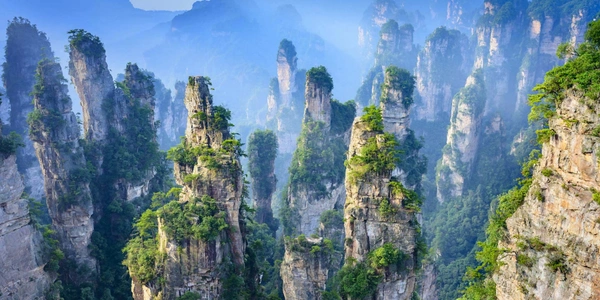
Zhangjiajie's floating stone pillars famous as inspiration for the "hovering islands" in Avatar rise from a vast system of karst rock formations, the largest concentration in the world.
Why it's sustainable: As a UNESCO World Heritage Site, Zhangjiajie National Forest Park keeps roughly 90% of its area under vegetation cover, with waterfalls and limestone caves protected alongside the peaks.
Good to know: Go after rain for the best cloud-and-mist effect around the pillars.
7. Jiuzhaigou, Sichuan: Best for Color-Changing Lakes
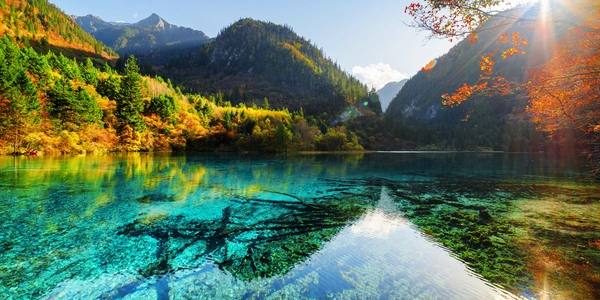
Jiuzhaigou National Park is known for crystal-clear lakes, travertine waterfalls, and water that shifts color through the day, framed by the snow-capped Min Shan range.
Why it's sustainable: After a 2017 earthquake closed the park for reconstruction, it reopened in 2018 with a strict daily cap of 2,000 visitors turning a former overcrowding problem into one of China's best-managed eco destinations.
Good to know: Book tickets well in advance; the visitor cap means walk-up entry is rarely possible.
8. Hulunbuir Grasslands, Inner Mongolia: Best for Open Steppe and Nomadic Culture
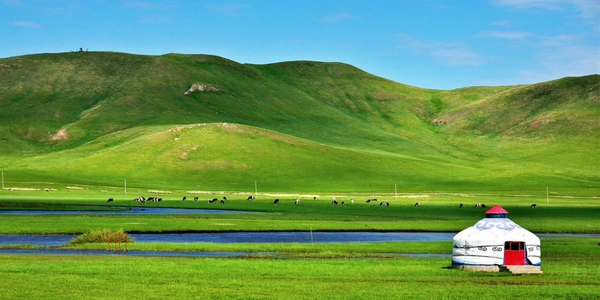
Hulunbuir, in the northernmost part of Inner Mongolia near Manchuria, covers more than 90,000 square kilometers of grassland at 650–700 meters elevation.
Why it's sustainable: Its scale and low population density keep tourism naturally dispersed, preserving both the grassland ecosystem and the yurt-based herding lifestyle still practiced there.
Good to know: Visit in summer for the greenest grasslands and to catch traditional Naadam-style herding events.
9. Mount Kawa Karpo, Yunnan: Best for Sacred Mountain Pilgrimage
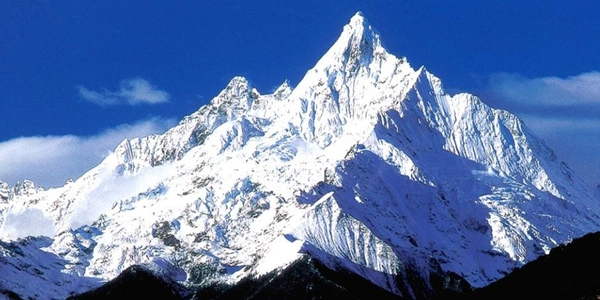
At 6,740 meters, Mount Kawa Karpo (Meili Snow Mountain) is the highest peak in the Hengduan range and a sacred site for Tibetan Buddhists, who complete a 240-km kora pilgrimage route around its base.
Why it's sustainable: The mountain has never been summited out of respect for its sacred status, and tourism is concentrated along the established kora route rather than spread across the fragile alpine terrain.
Good to know: The full kora is a multi-day trek; shorter viewpoint hikes are available for travelers with less time.
10. Huangguoshu Waterfall, Guizhou: Best for Multi-Angle Waterfall Views
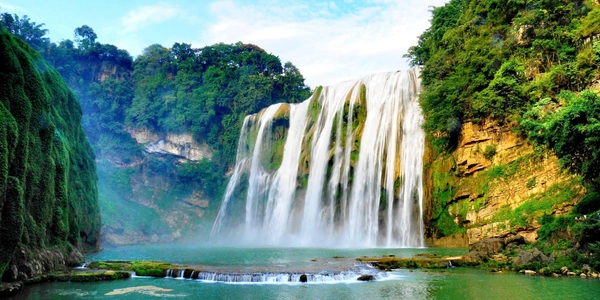
Huangguoshu is the largest waterfall in Asia, dropping 77.8 meters across a 101-meter span on the Baishui River, with roughly 700 cubic meters of water crashing over it every second.
Why it's sustainable: It's one of the only waterfalls in the world viewable from six angles above, below, front, behind, left, and right for a design that spreads foot traffic across multiple trails instead of concentrating it at a single overlook.
Good to know: Walk the path behind the falls for the closest (and mistiest) vantage point.
Planning Your Own China Eco Tour
🌿 Travel Greener with Scenic High-Speed Rail
Choosing rail travel is one of the most sustainable ways to explore, dramatically lowering your carbon footprint while offering front-row views of countryside landscapes.
-
Glide past mist-shrouded mountains, pristine river valleys, and rural vistas without the stress of frequent short-haul flights.
-
Discover eco-conscious itineraries and book your train adventure at mayflower.com.my/meet-you-train.
🐼 Immerse Yourself in China’s Eco-Wonders
From the emerald forests and sandstone pillars of Zhangjiajie to the protected panda sanctuaries in Sichuan and the alpine lakes of Jiuzhaigou, China offers incredible eco-tourism experiences.
-
Experience carefully crafted travel routes that honor local ecosystems, wildlife habitats, and heritage sites.
-
Explore nature-focused tour packages and start planning at mayflower.com.my/go-china.
Ready to embrace a more conscious way to travel? Visit mayflower.com.my today and start mapping out your eco-inspired getaway!
Frequently Asked Questions
Q: What is the most eco-friendly destination in China?
A: Mount Huangshan in Anhui is often considered China's most eco-friendly destination it holds an EarthCheck Silver Certification and has used a rotating trail-closure system since 1989 to let forest and soil recover.
Q: Which China eco destinations require advance booking?
A: Jiuzhaigou National Park caps daily visitors at 2,000, so tickets should be booked in advance. Popular trail sections of Mount Huangshan also rotate seasonally, so check availability before you go.
Q: Is Zhangjiajie the same place from the movie Avatar?
A: Zhangjiajie National Forest Park in Hunan inspired the "Hallelujah Mountains" floating peaks in Avatar and is where several film scenes were shot.
Q: What's the best time of year for eco-tourism in China?
A: It depends on the region: spring and autumn suit Zhangjiajie, Jiuzhaigou, and Yangshuo; summer is best for the Hulunbuir Grasslands and Changbai Mountain is a summer wildlife destination and winter ski destination.
How many UNESCO World Heritage eco-sites are on this list?
A: Two: Zhangjiajie National Forest Park and Jiuzhaigou National Park are both UNESCO World Heritage Sites.